

In the world of interior design, small spaces are not only a challenge but also an opportunity to express creativity and sophistication. With an artistic approach, every home, no matter how small, can become a living work of art, full of personality and comfort. Here are some design principles that will help you turn your small space into a surprisingly spacious and airy place.
1. Take Advantage of Visual Effects: Create Depth and Expand Space
Space is not only measured in square feet, but also in visual perception. Using large mirrors or wall mirrors is a great way to “double” the size of a room. Mirrors not only reflect light but also create the illusion of depth, making a small space feel larger and more airy.

Also, choose wall, floor and ceiling paint colors with the color tone Light colors like white, beige, or pastel blue also help create an airy feel. Using the same color on different surfaces can create continuity and reduce the feeling of space being divided, making the room appear larger.
2. Interior Design: Optimizing Space With Minimalist Style
Minimalism is not only a trend, but also the perfect solution for small homes. By eliminating unnecessary details and focusing on the essentials, you can create a clean, uncluttered, and sophisticated living space. Furniture with simple lines, neutral colors, and natural materials such as wood, stone, and linen will bring a relaxed, elegant, yet cozy feeling.

3. Exploiting Hidden Spaces: Small Corners Become Highlights
In every small house, there are always hidden corners or spaces that are often overlooked. Don't miss the opportunity to turn these areas into unique focal points. An empty wall corner can become a mini bookshelf, a relaxing place with a small reading chair, or an indoor garden with lush green potted plants.
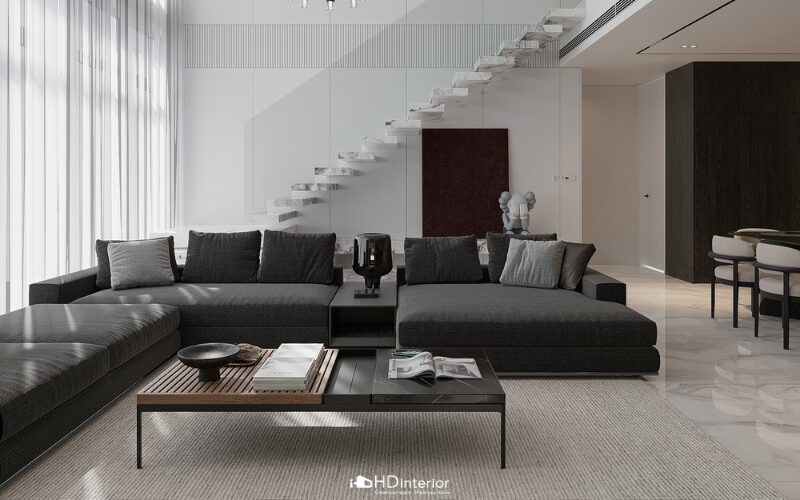
Exploiting the space under the stairs or above with smart storage cabinets is also a way to optimize space in a subtle and creative way. Instead of trying to fill every gap, let the space "breathe" and naturally shine through subtle arrangements.
4. Thematic Design: Create Unity and Inspiration
An important principle in interior design for small houses is to create unity and connection between spaces through a certain design theme. This theme can be a style, a color, or a specific story. In this way, you not only optimize the space but also create an inspiring living space where each item has its own story.
For example, if you love the Nordic style with its clean lines, natural light, and rustic wood materials, apply that throughout the entire space. This unity will bring a more spacious and airy feeling to your home.
Conclude
Small space design is not just about arranging furniture properly, but also the art of creating a balance between form and function. By taking advantage of visual effects, applying minimalist style, exploiting hidden spaces, and designing according to themes, you can turn your small house into a unique, spacious, and surprisingly airy living space. Start exploring and creating to bring great things to your living space.
 EN
EN  VI
VI