
5. Break up the space with a rug
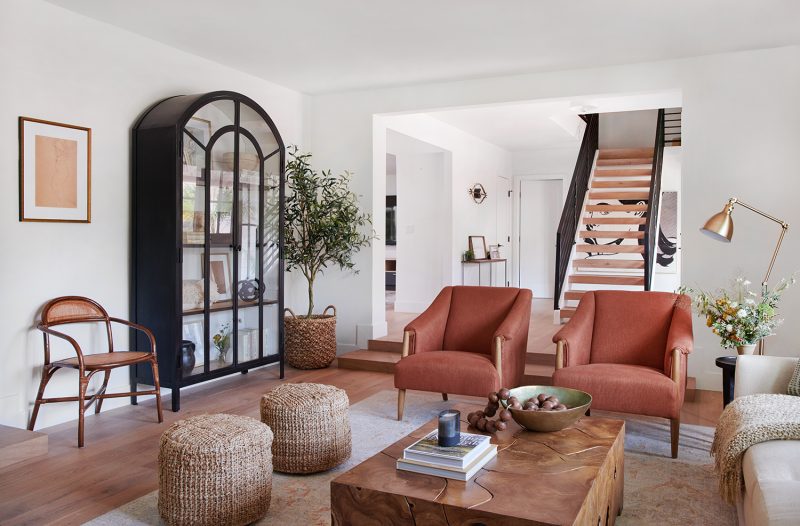
If you’re dealing with similar stains on wood and want to break up the monotony, consider a visual palette cleanser in the form of a rug. For example, in the living room above, the slightly cool vintage rug offsets the warmth of the wood floors, walnut-framed chairs, and wood coffee table, while the jute sofa adds a soft, sandy feel. It’s also worth noting that the lived-in nature and varied textures of the coffee table keep it from feeling too monotonous with the chairs.
6. Use tone (but add contrast elsewhere)
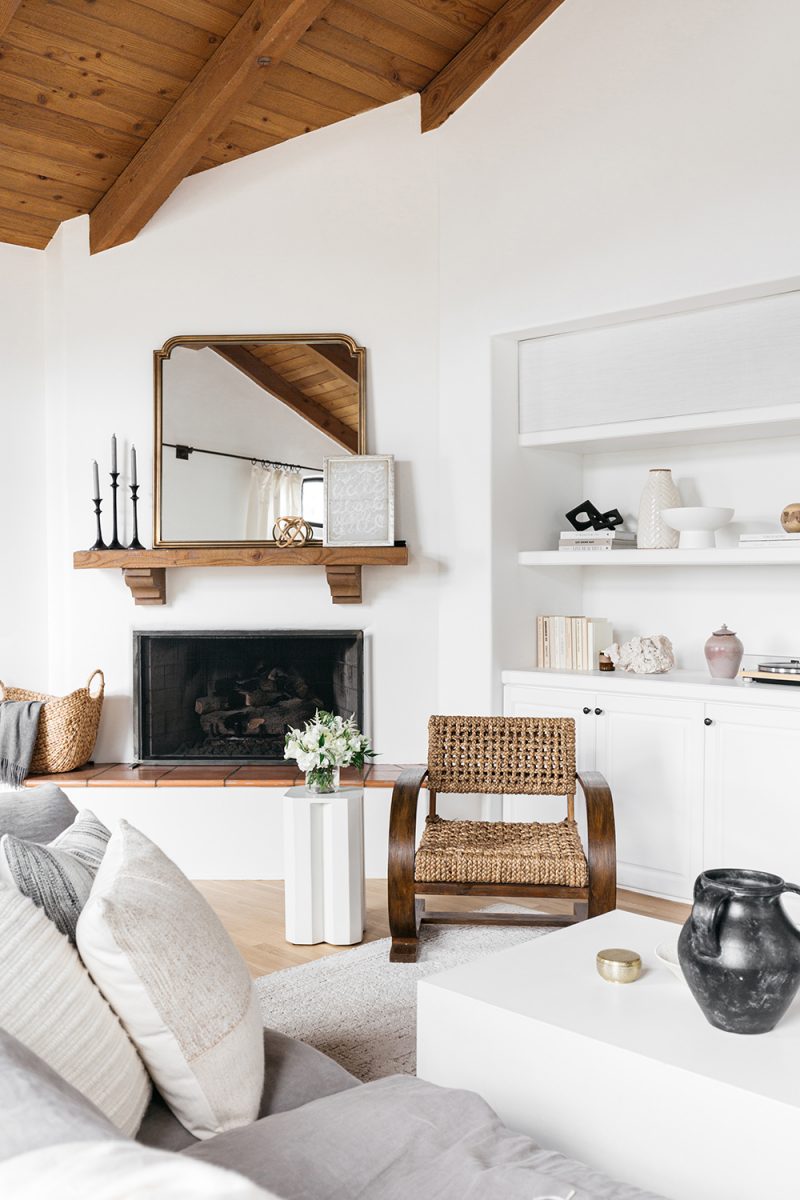
If you’re working with wood tones, create a harmonious look by adding (heavy) contrast elsewhere. For example, the living space above has a wood ceiling, accent chair, and fireplace in the same color, but the high-contrast white walls, rug, couch, and coffee table break it up nicely.
7. Change shape and size
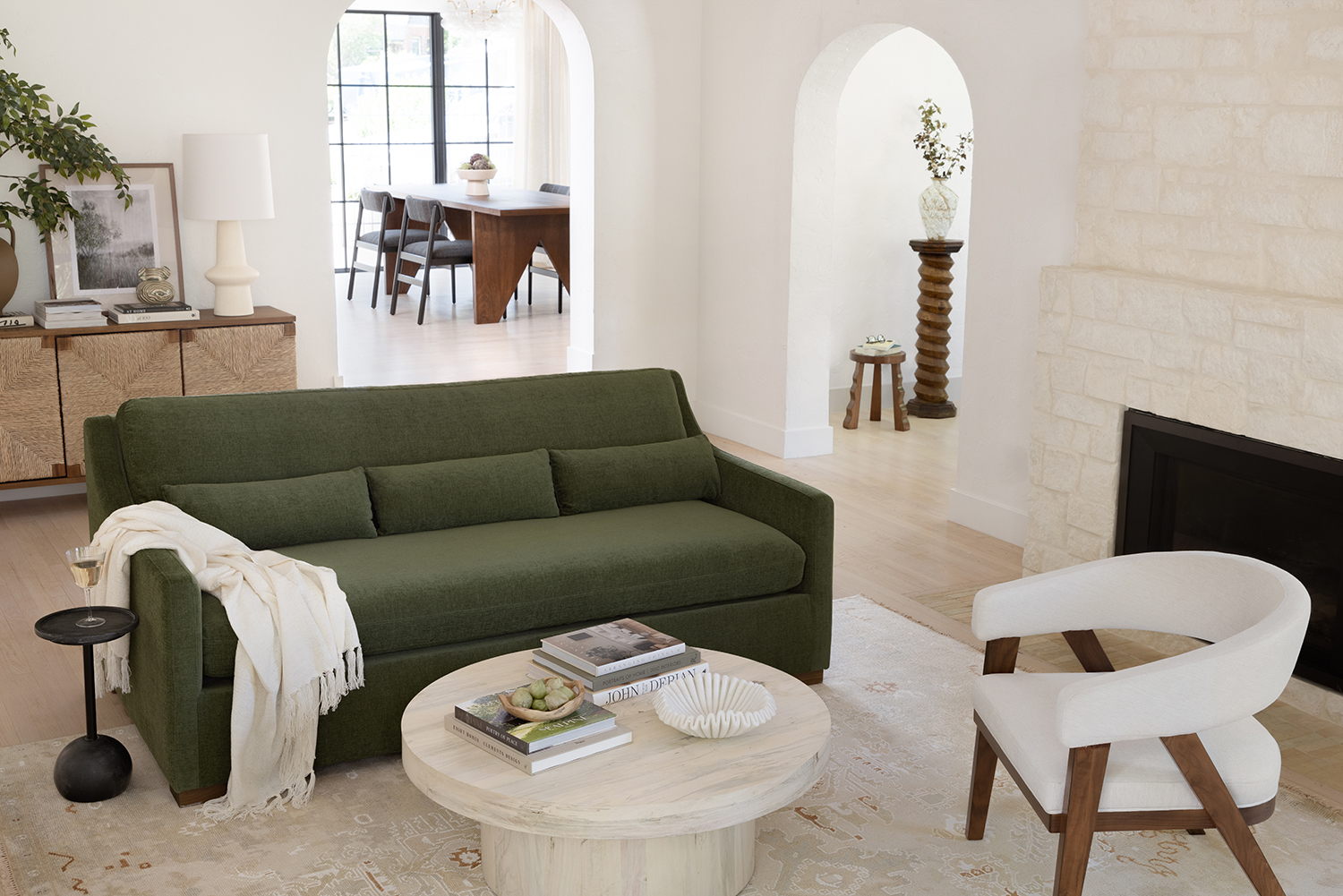
If you’re working with a single wood tone, like the dark walnut in the living space above, break up the visual monotony with different shapes and sizes. While the wooden credenza is your standard rectangle, the rounded wood accent chair, scalloped wood pedestal, undulating wood stools, and sculptural dining table add visual interest and a unique handcrafted quality. Choosing unexpected shapes like this is another way to break up the visual monotony.
8. Add texture
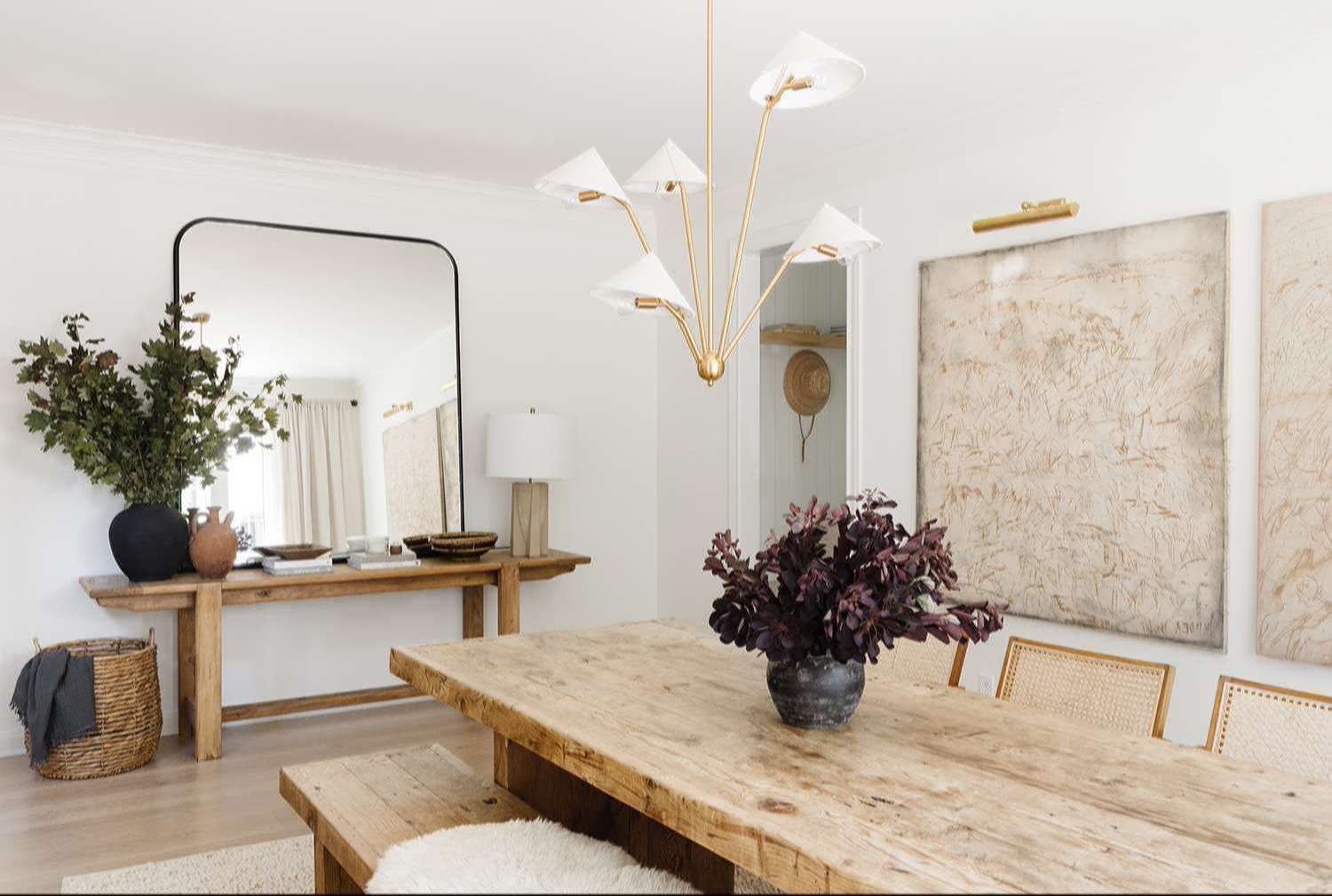
When it comes to wood, think beyond the planks. material Wood like rattan, rattan, wicker and bamboo all provide a natural, authentic feel while adding much-needed texture and visual variation. For example, when shopping for wooden dining chairs, consider some rattan or rattan (or even leather!) for that extra something – both in colour and texture.
 EN
EN  VI
VI